
Industrial Weighing Scale
Industrial weighing scales are essential equipment used across manufacturing, warehousing, logistics, transportation, construction, and other industries where accurate weight measurement is important. These scales are designed to handle different load capacities, from lightweight materials and components to heavy pallets, machinery, drums, and industrial goods. With strong construction, accurate weighing systems, digital displays, and advanced communication features, industrial weighing scales help businesses improve operational efficiency, inventory management, quality control, and workplace safety.
Choosing the right industrial weighing scale depends on several factors, including the required weight capacity, weighing environment, type of material being weighed, accuracy requirements, available space, and application. Different industrial weighing scale types are designed for specific purposes, making it important to understand their features and capabilities before selecting a suitable model.
Professional Sales, Calibration and Service Support
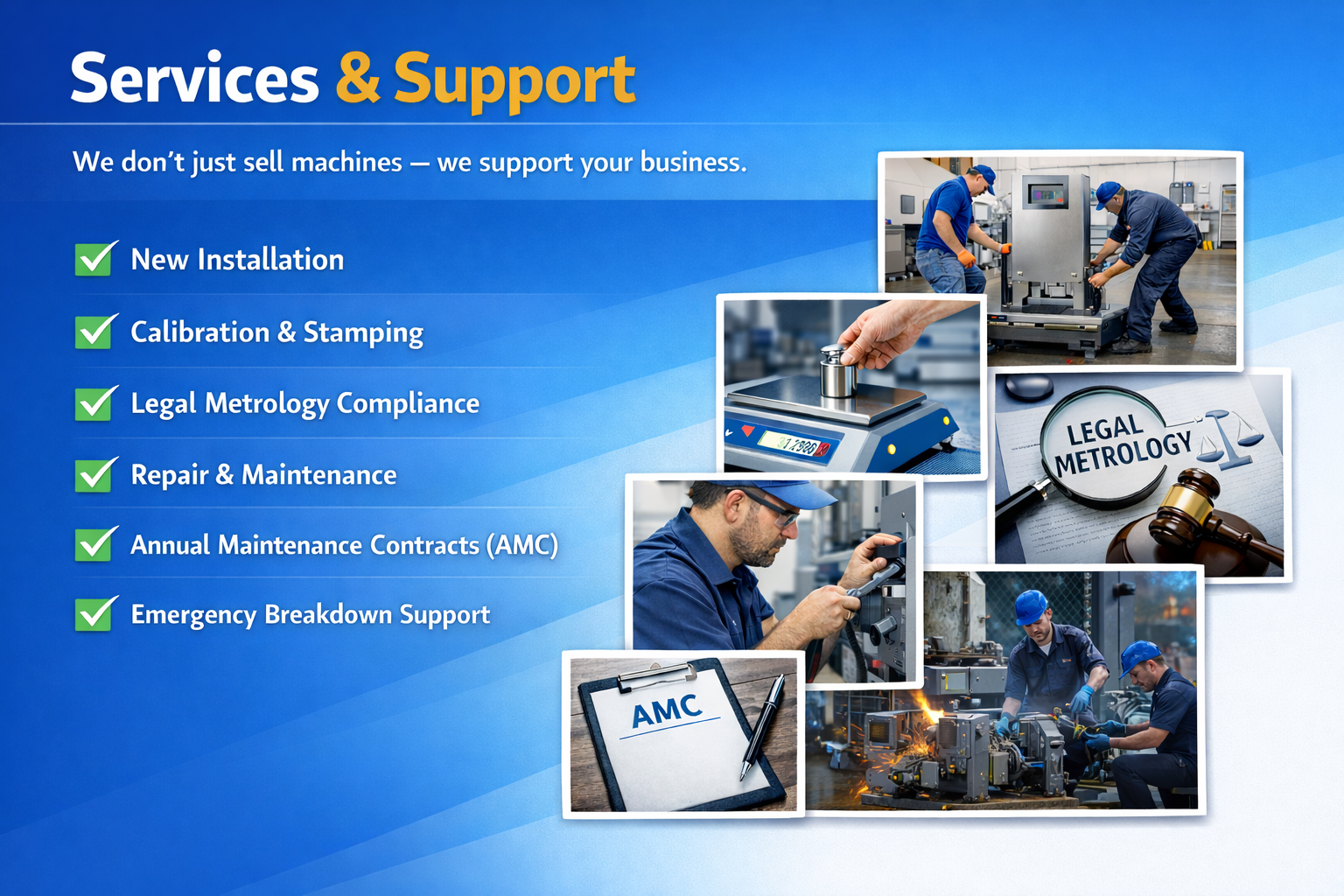
In addition to supplying weighing equipment, RPM Corporation supports customers with professional sales assistance, calibration, maintenance, and service. Proper calibration and regular maintenance are important for maintaining reliable weighing performance and accurate measurement.
The company's service-oriented approach helps customers select suitable weighing equipment and maintain their weighing systems according to their operational requirements.
Weighing Solutions for Multiple Industries
Accurate weight measurement is an important part of production, inventory control, quality management, material handling, and commercial operations. RPM Corporation provides weighing solutions suitable for various industries, including manufacturing, commercial businesses, retail operations, food processing, pharmaceutical applications, warehouses, and logistics.
Depending on the application, businesses can select suitable weighing systems based on capacity, platform size, accuracy, operating environment, and weighing requirements.
Types of Industrial Weighing Scales
Different industrial applications demand different weighing solutions. From compact benches to heavy-duty truck weighbridges, each scale is designed for a specific purpose and operating environment.
Platform Weighing Scales
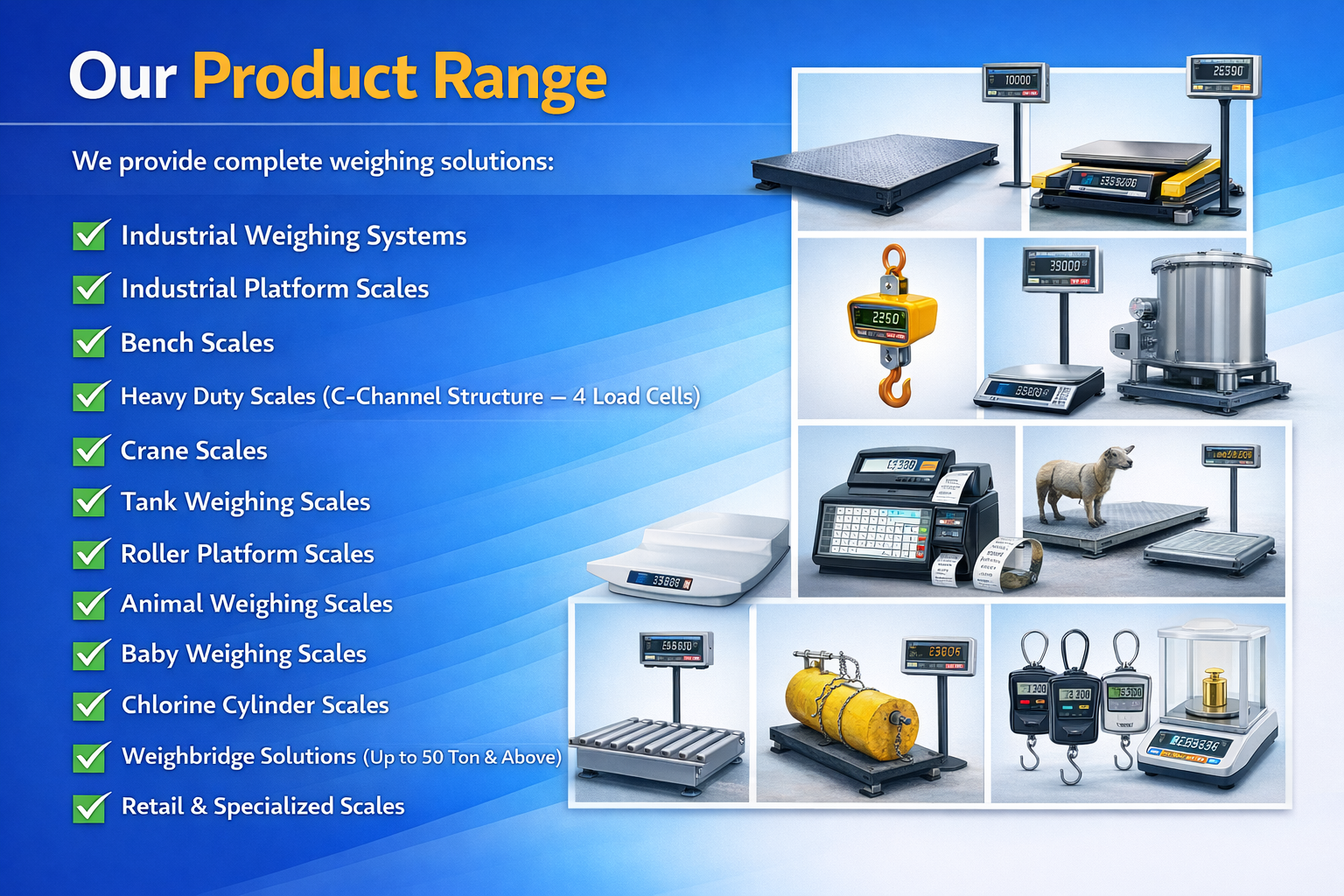
Platform weighing scales feature a large and sturdy weighing platform designed to accommodate various types of materials and industrial products. They are available in different platform sizes and weight capacities, making them suitable for manufacturing facilities, warehouses, production units, and commercial applications. Platform scales can be used for weighing cartons, machinery parts, raw materials, finished products, and other industrial items.
Crane Weighing Scales
Crane weighing scales are designed to measure the weight of suspended loads while materials are being lifted by cranes or hoists. They are useful in industries that regularly handle heavy machinery, steel products, construction materials, and other large loads. Crane scales can help operators monitor load weight during lifting operations and support safer material handling practices.
Floor Weighing Scales
Floor weighing scales are heavy-duty scales designed for installation directly on the floor. They are particularly useful when weighing large or bulky items that are difficult to place on a conventional bench or platform scale. These scales are widely used for weighing pallets, drums, containers, sacks, machinery components, and other heavy materials in warehouses, factories, logistics centers, and shipping facilities.
Bench Weighing Scales
Bench weighing scales are compact weighing systems designed to be placed on tables, workbenches, or other suitable surfaces. They are commonly used for weighing smaller components, packaged products, ingredients, spare parts, and materials. Their compact design makes them convenient for manufacturing processes, laboratories, workshops, retail operations, and quality-control applications.
Truck Weighing Scales
Truck weighing scales, also known as weighbridges, are designed to measure the total weight of trucks and their loads. They are commonly used in logistics facilities, industrial plants, transportation centers, warehouses, mining operations, and other locations where large quantities of goods are transported. Accurate truck weighing can assist with inventory control, dispatch documentation, and compliance with applicable weight requirements.
Important Features of Industrial Weighing Scales
High Weight Capacity
Industrial weighing scales are available with different load capacities to suit specific applications. Depending on the type of scale, capacity can range from a few kilograms to several tons. Selecting an appropriate capacity is important for obtaining reliable measurements and ensuring safe operation.
Accurate Weight Measurement
Accuracy is one of the most important factors when selecting an industrial weighing scale. Proper calibration, suitable load cells, correct installation, and regular maintenance all contribute to reliable weight measurement. High-quality scales can provide precise readings according to their specified accuracy class and application requirements.
Strong Industrial Construction
Industrial scales are generally manufactured using durable materials such as steel or stainless steel to withstand heavy loads and demanding working conditions. Depending on the application, certain models may also incorporate protective finishes or corrosion-resistant construction for use in challenging environments.
Digital Display
Most modern industrial weighing scales use digital displays to provide clear and easy-to-read weight measurements. Digital indicators can make it easier for operators to monitor weight in real time and record measurements during production, storage, dispatch, or material handling operations.
Tare and Zero Functions
Tare functionality allows operators to remove the weight of containers, packaging, pallets, or other items from the displayed measurement. Zero adjustment allows the weighing system to return to a zero reference when required. These functions make industrial weighing operations more convenient and efficient.
Multiple Unit Conversion
Many industrial weighing scales support multiple units of measurement. Unit conversion can be useful when different departments, suppliers, customers, or production processes require weight information in different units.
Communication Interfaces
Advanced industrial weighing systems can include communication interfaces such as RS-232, USB, Ethernet, or Bluetooth. These interfaces can allow weight data to be transferred to computers, printers, software systems, production equipment, or other digital platforms for record keeping and process integration.
Applications of Industrial Weighing Scales
Industrial weighing scales are used in a wide range of industries because accurate weight measurement is essential for production, inventory, transportation, and quality control.
Warehousing and Logistics
Warehouses and logistics facilities use industrial scales for weighing incoming materials, outgoing shipments, pallets, packages, and other goods. Weight information can support inventory management, shipping documentation, receiving operations, and dispatch processes.
Manufacturing Industries
Manufacturing companies use weighing scales to measure raw materials, components, mixtures, semi-finished products, and finished goods. Accurate weighing can help maintain production consistency and support quality-control procedures.
Transportation and Weigh Stations
Truck weighing scales are used to determine the weight of commercial vehicles and their loads. They are useful at transportation hubs, industrial facilities, logistics centers, and weigh stations where vehicle weight information is required.
Construction and Material Handling
Crane scales are useful in construction and heavy material-handling operations where large components and equipment need to be lifted and weighed. They can provide weight information during lifting operations and help operators manage loads more effectively.
Retail and Commercial Operations
Bench and platform scales are also used in commercial environments where products are sold or handled according to weight. They can be used for weighing packaged goods, food products, components, and other materials.
Importance of Maintenance and Calibration
Regular maintenance and calibration are essential for maintaining the accuracy and reliability of an industrial weighing scale. Dust, dirt, moisture, mechanical damage, overloads, environmental conditions, and continuous use can affect weighing performance over time.
Routine maintenance may include cleaning the weighing platform, inspecting load cells and cables, checking structural components, verifying the display and electrical connections, and examining the scale for signs of damage. Calibration should be carried out using suitable certified weights or approved calibration equipment according to the manufacturer's recommendations and applicable requirements. Some advanced weighing systems may provide calibration functions that simplify the calibration process. However, calibration and servicing should be performed by qualified personnel whenever technical expertise or certification is required.
How to Choose the Right Industrial Weighing Scale
Before purchasing an industrial weighing scale, businesses should evaluate the application and operating environment carefully. Important considerations include maximum load capacity, minimum load, required accuracy, platform dimensions, weighing frequency, installation location, environmental conditions, display requirements, communication options, and maintenance requirements.
For pallet and heavy-material applications, floor or platform weighing scales may be appropriate. Bench scales are generally more suitable for smaller components and products, while crane scales can be useful for suspended loads. Truck weighing applications require larger weighbridge systems designed specifically for vehicle weighing.
Conclusion
Industrial weighing scales play an important role in modern manufacturing, warehousing, logistics, transportation, construction, and commercial operations. Platform scales, bench scales, floor scales, crane scales, and truck weighing scales provide different weighing solutions based on load type, capacity, and application requirements. Features such as durable construction, accurate measurement, digital displays, tare functions, unit conversion, and communication interfaces can further improve weighing efficiency.
Selecting the appropriate industrial weighing scale and maintaining it through regular inspection and calibration can help businesses achieve reliable measurements, improve operational efficiency, support inventory control, and maintain consistent quality standards. For demanding industrial environments, choosing a weighing solution based on the actual application, load capacity, accuracy requirements, and operating conditions is essential for long-term performance.